Progress for 2030
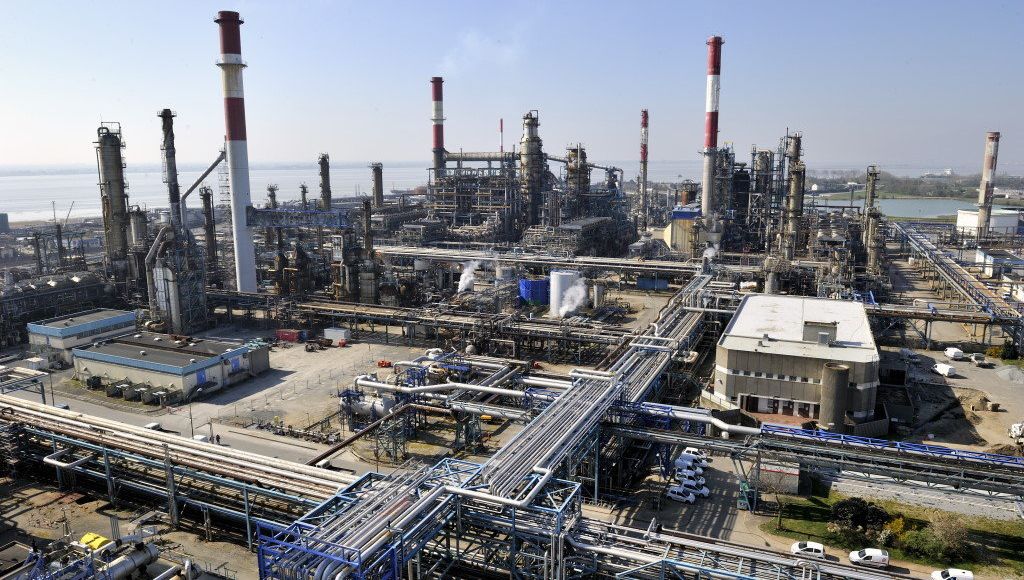
This is one of the conclusions from the annual report of the High Council for the Climate, published this Thursday, June 20. The council commends France’s progress in reducing CO2 emissions and judges Paris capable of achieving its 2030 climate goals. « The pace of France’s decarbonization, with a decrease in gross greenhouse gas emissions that accelerated in 2023, is approaching for the first time the expected pace to meet its 2030 climate objectives, » writes the HCC. France aims to reduce gross emissions by 50% by 2030 (compared to 1990 levels), in line with the European « Fit for 55 » ambition.
Significant but Uneven Advances
Despite « important advances, » the progress is « uneven » across sectors, with some political setbacks, notably in agriculture. This sector « suffers from a lack of coherence between agricultural, food, environmental, and climate policies, » notes Corinne Le Quéré. « Over the past 12 months, agricultural policies have seen a decline in climate public action, » the report states, referencing responses to farmers’ protests earlier this year.
Experts also highlight the absence of a « comprehensive strategy or plan for forest ecosystem regeneration, » given the weakened capacity of soils and trees to absorb CO2 over the years.
Urgent Need for a « Scale Change »
Looking ahead to a more distant horizon, the High Council urges France to establish a « clear direction for the 2030-2040 decade, to build the capacity to achieve carbon neutrality by 2050. » France is still not on the right track to reach this goal. « Despite significant progress, adaptation efforts remain out of sync with vulnerabilities and needs, » said HCC President Corinne Le Quéré, a Franco-Canadian climatologist, at a press briefing. Effective climate action must protect children, households, and businesses, she added. Last year ranked as the second hottest year in France, marked by local water shortages due to drought, devastating wildfires, heatwaves, intense storms, and floods.
Delay in Key Climate Policies
Among 65 recommendations, the HCC calls for the « rapid finalization and adoption » of crucial climate policy texts, including the National Low Carbon Strategy (SNBC) and the Multiannual Energy Programming (PPE). This urgency is to ensure each actor has the necessary visibility to act coherently over time, emphasized Corinne Le Quéré.
The government, committed to its ecological planning, insists that the contents of energy and carbon neutrality roadmaps are « already on the table, » even if not yet legally formalized. The adaptation plan is also « ready, » they claim.
HCC Renewed for a Second Term
The High Council for the Climate has been renewed by decree for a second term this Thursday, June 20, 2024. Agronomist Jean-François Soussana, a soil health and climate change specialist who contributed to IPCC reports for over 20 years, succeeds Franco-Canadian climatologist Corinne Le Quéré as head of the council. Established in 2018 by Emmanuel Macron, the council’s first term concludes on June 24 and is renewed with 12 experts.
Jean-François Soussana, who has contributed to IPCC work since 1998, takes over from Le Quéré. He is also one of the 15 experts on the European Scientific Advisory Board, the HCC’s EU equivalent. The HCC welcomes four new members: inspector general Selma Mahfouz, economist Paul Leadley, coastal erosion expert Gonéri Le Cozannet, and Diane Strauss, director of the NGO Transport & Environment. Eight members, including climatologist Valérie Masson-Delmotte and engineer Jean-Marc Jancovici, continue their roles within the council, which advises the Prime Minister on climate policy.
(With AFP)